Road Base: Picking and Sizing a Compacted Base Layer
Also known as: Base Rock, Aggregate Base, Class 5, Roadbase
3/4 inch minus crushed aggregate blend engineered for road construction and heavy load-bearing applications. Compacts into an extremely dense, stable foundation.
From $378 for 1 ton, delivery to 56527 included (larger loads cost significantly less per ton)
Free delivery included
Enter your ZIP to see your competitive price
Delivered to 56527
Pick a delivery date
Weekday delivery, earliest Nov 3
“The road base compacted well and created a dependable foundation.”
Paul M. · Verified Buyer
Get a Free Quote
Fill out the form and our sales team will get back to you within the hour.
The choice most people are weighing when they land here is not which stone to buy, it is whether to put road base underneath the surface they want or just tip another load of loose gravel on top of the ruts. The honest answer moves with the map. Ground that freezes to 48 inches under the codes in Massachusetts, New Hampshire and Wisconsin fails for a different reason than ground in Florida or south Texas that never freezes at all, and the layer that fixes one is not always the layer that fixes the other.
What a load of road base looks like when it lands on the drive
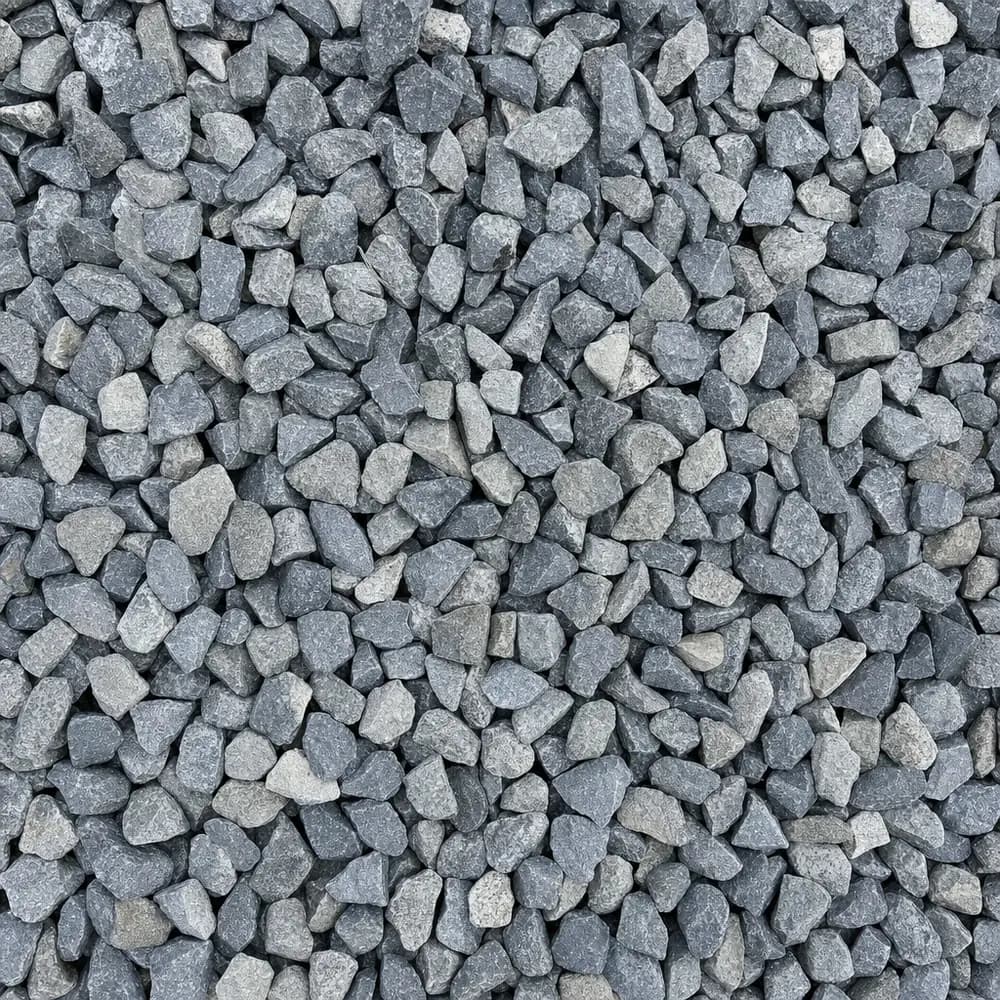
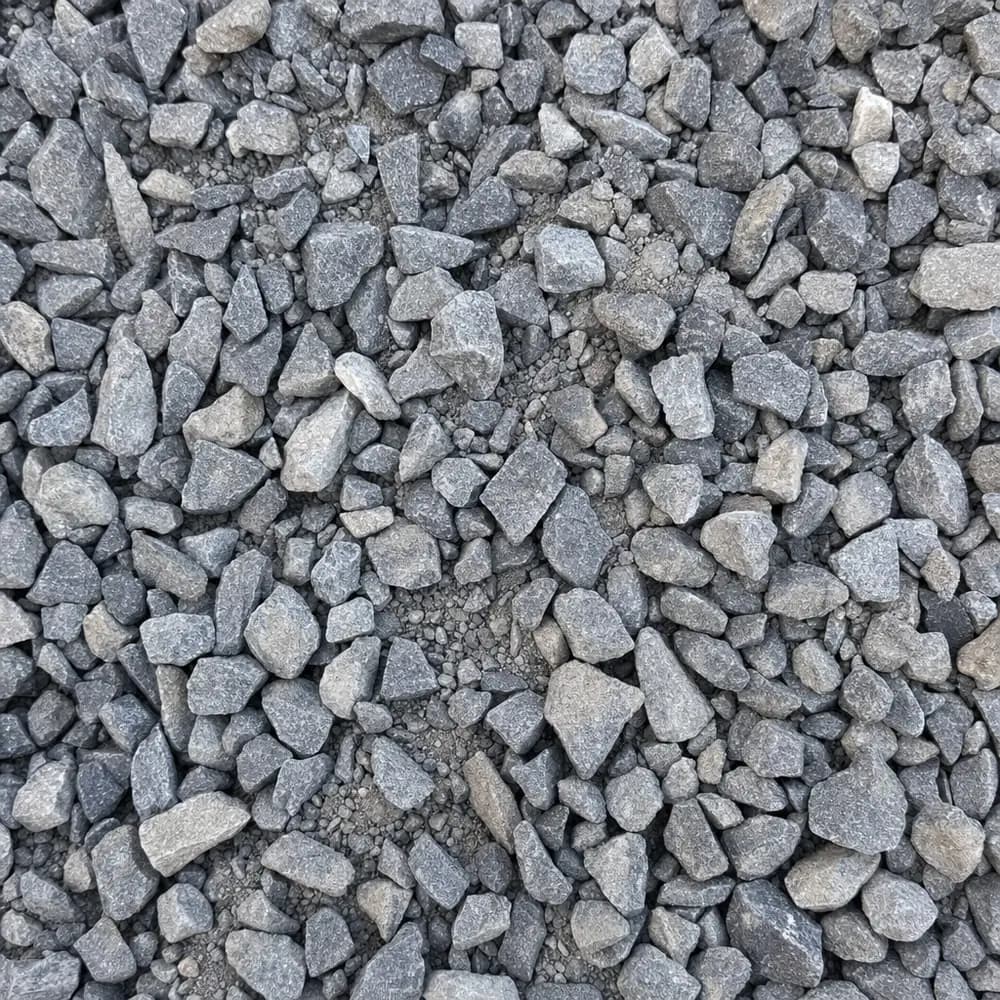
Tip a yard of this material out and it does not look like landscape stone. It looks like a construction pile: gray to tan depending on the rock it came from, the biggest pieces about an inch across, then every size below that down to dust. Nothing in it is uniform, and that is deliberate. The product is a one-inch-minus crushed aggregate blend, meaning crushed stone, gravel and binding fines graded together on purpose.
Squeeze a damp handful and it holds its shape. Squeeze a handful of clean washed stone and it falls apart in your palm. That single difference is the whole argument for using it. The large pieces carry the structure, the small pieces and dust fill the gaps between them, and under a plate or a roller the mass locks into a dense, stable layer that spreads wheel loads across the subgrade instead of letting them punch through it.
The trade for that strength is that the same fines slow water down. A base layer is not a drainage layer, which becomes the deciding point on several of the jobs below.
Frost country, sun belt lots and wet coastal ground
Read these as if-then lines rather than as one national rule.
- If you are in frost country, the enemy is heave. Water trapped in the subgrade freezes, lifts the surface, thaws and leaves a soft pocket behind. A compacted base spreads the load and, just as usefully, keeps the wet fine subgrade away from the wheels. Build it to full depth and keep the finished surface shedding water sideways.
- If you are on sun belt ground in Florida or south Texas, frost is not the issue. Heavy rain and a high water table are. The base is there to carry the load over soft, saturated ground, so depth of layer and a properly crowned surface matter more than anything else.
- If you are on wet coastal ground, plan drainage before you plan the base. A compacted layer over a spot that already ponds simply becomes a firmer lid on the same wet pocket.
Names vary as much as the ground does. State transportation departments specify their own base course products under their own labels: Class 6 in Colorado, Flex Base in Texas, ABC stone in North Carolina, 21A in Virginia, 2A modified in Pennsylvania. Those are examples of how one idea gets named region to region, not grades certified here. What ships from this catalogue is Road Base, and its closest relative on the site is Crusher Run.
Three jobs where the fines work against you
Inside raised vegetable beds. Three beds at 4 by 8 feet, filled 10 inches deep, come to 4 x 8 x 10 / 12 = 26.7 cubic feet each, so 80 cubic feet in total, or 80 / 27 = about 3 cubic yards. That volume wants Garden Soil or Top Soil. Roots will not push through compacted fines, and the layer holds water against them.
As the surface you look at every day. The fines wash to the low corner in the first storm and track indoors on shoes. Where the surface is meant to be seen, run River Rock or Walkway Gravel over the base instead of leaving the base exposed.
In a trench that has to move water. A French drain or a wall backfill wants a clean, open stone such as #57 Stone or Drain Rock. Fines are exactly the thing that clogs a drain.
Depth for a single-car drive against a flagstone walkway
| Job | Base depth to plan | Note |
|---|---|---|
| Foot traffic path or flagstone walkway | 4 in | Enough to stop a slab of stone rocking or settling |
| Single-car drive, cars and a light truck | 4 to 6 in | Build it in two lifts rather than one thick layer |
| Pad for a trailer, an RV or work equipment | 6 in or more | Go deeper over soft or recently disturbed ground |
| Patching a rutted section | Match the depth around it | Dig the soft material out first, do not bury it |
Two rules cut across all of them. Strip sod and soft topsoil before the base goes down, because organic material keeps compressing for years after you stop looking at it. And compact in lifts of a few inches at a time, wetting the material lightly so the fines bind rather than blow off as dust.
Measuring a 12 by 45 foot single-car drive
The tool on this page takes length and width in feet and depth in inches, divides to cubic yards, then multiplies by the material weight.
The drive. 12 x 45 = 540 square feet. At 6 inches: 540 x 6 / 12 = 270 cubic feet. 270 / 27 = 10 cubic yards. Road base is figured at about 3,000 lb per cubic yard, so 10 x 1.50 = 15 tons.
The flagstone walkway. 3 feet wide by 30 feet long at 4 inches: 3 x 30 = 90 square feet, 90 x 4 / 12 = 30 cubic feet, 30 / 27 = 1.11 cubic yards, which is about 1.7 tons.
Both figures are hypothetical examples rather than customer jobs. The road base calculator adds 10 percent extra by default, which is worth keeping if the ground is uneven or you expect spillage around the dump spot. For more shapes and depth guides, it runs the same arithmetic with room for up to five areas.
What goes on top once the base is locked up
A base layer is rarely the finished surface. On a drive, most people run 2 to 3 inches of Driveway Gravel or 3/4 inch Crushed Stone over the compacted base, which keeps the fines covered and gives tires something angular to bite into. Under pavers, a bedding layer of Mason Sand sits between the base and the stone. On a path, the top course can be a smaller decorative gravel that is comfortable to walk on barefoot.
Once the depth is settled, set your tonnage and a delivery date on this page. Delivery is arranged at checkout by ZIP code, so pick a dump spot on firm ground with clear overhead access before the truck arrives. If you would rather talk depth through for your part of the country first, American Rock Supply takes calls and texts through the contact page.
Quickly Calculate How Much You Need
Material: Road Base
How to Measure
Measure the length and width of your project area in feet
Decide on depth in inches (2" for landscaping, 4" for driveways)
Enter the values above and we'll calculate the tonnage you need
Need help figuring out the right amount? We can help!
Call or text us at (888) 389-5517 and we'll help you calculate the right quantity for your project.
Not sure how much you need? The Road Base Calculator has depth guides, coverage charts and worked examples for this material.
Frequently Asked Questions About Road Base
Customer Reviews
Ordering was about as painless as it gets, picked my ton count online, picked a date, done. Material arrived clean and well graded, no weird oversized chunks mixed in.
Paul M. · Montgomery, AL · Verified Buyer
Six tons went down under the pole barn slab prep and it graded out beautifully. Really happy with how it turned out, the surface was firm enough to walk on within a day.
Tara N. · Dallas, TX · Verified Buyer
Used it for a compacted path behind the shop and it's held up through a week of steady rain already. Solid enough that I'll go back to them next time we extend it, and I've already told my neighbor to check them out for his project.
Kelly C. · Henderson, NV · Verified Buyer
Strong base material
The road base compacted well and created a dependable foundation.
Paul M. · Montgomery, AL · Verified Buyer
Reliable for a driveway
This worked well for a driveway base. It compacted hard and hasn't shifted.
Tara N. · Dallas, TX · Verified Buyer
Reliable for a driveway
I used this on a muddy access road and it made a big difference. The surface is firm now.
Diane N. · Las Vegas, NV · Verified Buyer
Packs down well
This stuff sets up firm once it's rolled or tamped. It made a big difference on a muddy access road.
Doug L. · Tulsa, OK · Verified Buyer
Good for a driveway
I spread this on a gravel driveway that had potholes. It filled them in and the driveway is much smoother now.
Susan V. · Reno, NV · Verified Buyer
A bit dusty
It packed down well and the driveway is solid.
Rob H. · Marietta, GA · Verified Buyer
A little dusty
It compacted well and has held up fine.
Mark W. · Henderson, NV · Verified Buyer
Solid base material
I used this to build up a driveway that had gotten soft. It compacted hard and the surface is stable now.
Scott A. · Savannah, GA · Verified Buyer
Road Base has 11 verified customer reviews with an average rating of 4.8 out of 5.