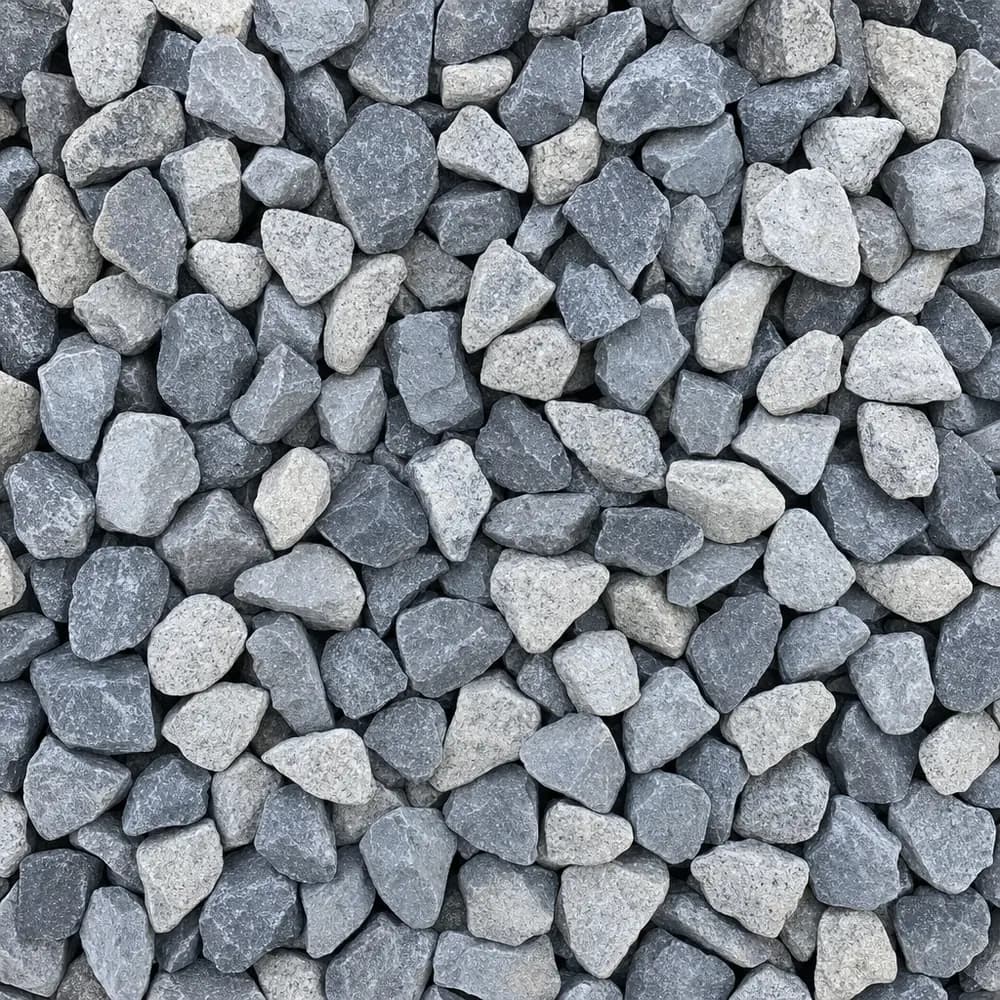
#10 Stone Screenings: The 1/4 Inch Minus That Packs Flat
Also known as: Screenings, Stone Dust, Crusher Dust, Paver Base
1/4 inch minus crushed stone dust and fine particles. Perfect for leveling, base preparation, paver bedding, and finishing work. Compacts into a smooth, firm surface.
From $455 for 1 ton, delivery to 40472 included (larger loads cost significantly less per ton)
Free delivery included
Enter your ZIP to see your competitive price
Delivered to 40472
Pick a delivery date
Weekday delivery, earliest Nov 3
“Solid stuff. Used it as base under a small shed and it packed down almost like concrete once I tamped it.”
Megan F. · Verified Buyer
Get a Free Quote
Fill out the form and our sales team will get back to you within the hour.
Run a handful of screenings through your fingers and the first surprise is how little of it looks like stone. What you are holding is gray grit with flecks up to about a quarter of an inch in it, and it leaves dust on your palm. Squeeze a damp handful and it holds its shape; that is the property the whole product is bought for. Around the country the pile behaves differently before you have even spread it. Loads delivered into gulf-coast humidity arrive damp and clump under the shovel. In a dry Rocky Mountain summer the same material blows off the top of the wheelbarrow.
Stone screenings are the fine end of the crushing process: 1/4 inch minus angular particles and stone dust, with nothing large in the mix. Everything below follows from that gradation.
What the gradation actually gives you
Three things, and it is worth being exact about them because the material is often bought for a fourth thing it cannot do.
- It fills voids. Fine angular particles find their way into gaps and low spots, which is why it screeds to a flat plane so easily.
- It binds when damp and compacted. Moisture plus a plate compactor pulls the particles together into a firm, dense layer that holds a level.
- It does not drain. Those same fines close the voids that water would otherwise move through. Anything that needs flow wants an open-graded stone instead.
Job by job, where stone screenings earn their place
| Job | Does it suit | What to watch |
|---|---|---|
| Bedding under pavers and flagstone | Yes, this is its main job | Screed a thin, even layer; do not use it as the structural base |
| Filling joints between units | Yes | Sweep dry, mist, sweep again until joints stay full |
| Leveling a hot tub or shed pad | Yes, over a compacted base | Get the pad flat before the tub arrives, not after |
| A firm, cart-friendly path surface | Yes | Water it and compact it or it stays dusty |
| A French drain or a trench | No | The fines choke the flow the trench is there for |
| Deep fill in a low area | No | Use a fill material and save this for the top layer |
Fines, frost and humidity: what changes between regions
A layer of fines holds a little water by nature, and what happens to that water depends where you are.
In the frost belt, water held in a bedding layer freezes and lifts the units above it, which is why northern paver work is usually built over a thick, free-draining compacted base with only a thin bedding course on top. Across the southern half of the country the issue is rain volume rather than freezing: water that cannot pass through a compacted layer has to be given a route around it, or it finds the edges and undermines them. On wet coastal ground, a layer of fines placed straight onto a saturated subgrade will pump and wobble under load no matter how well it was rolled.
Why a new lawn is not a screenings job
This material gets ordered for lawn preparation more often than it should be. It contains no organic matter, holds almost no plant-available water and compacts hard, which is close to the opposite of what grass roots need. Use Top Soil for a new lawn surface, Garden Soil for beds, and Fill Dirt to bring a low area up before either of them goes on. The only honest role for screenings near a new lawn is leveling the hard surfaces beside it: the path, the pad or the edging course.
Measuring a hot tub pad and a 40 foot path in cubic yards
Both are hypothetical examples. This site's calculator figures screenings at about 2,900 lb per cubic yard, or 1.45 tons per yard, so the tonnages below are approximate; the stone calculator will run the same conversion on your own dimensions.
Hot tub pad, bedding course. 8 by 8 feet at 1 inch over a compacted base: 8 x 8 = 64 square feet. 64 x 1 / 12 = 5.33 cubic feet. 5.33 / 27 = 0.20 cubic yards, which is about 0.29 tons.
Compacted garden path. 40 feet long by 3.5 feet wide at 2 inches: 40 x 3.5 = 140 square feet. 140 x 2 / 12 = 23.33 cubic feet. 23.33 / 27 = 0.86 cubic yards, and 0.86 x 1.45 = roughly 1.25 tons.
A cubic yard spread 1 inch thick covers about 324 square feet, and at 2 inches about 162 square feet. Bedding layers are thin, so small errors matter less in volume than in flatness; order to the nearest sensible quantity and keep the surplus for joints.
Getting the ground ready for a load of dust
Because the material is fine, where it lands matters more than with a coarse stone. A pile dumped on grass leaves a gray patch that takes a season to recover, and a pile caught by wind on a dry day spreads further than you want. Ask for the drop on a hard surface or on plastic if you have it, and plan to move it the same day.
Set the tonnage and the delivery date on this page. Delivery is arranged at checkout by ZIP code, and the truck needs clear access to a spot it can tip in without backing across soft ground. If your area is an awkward shape and you want the volume checked before ordering, the contact page takes a quote request by email.
Quickly Calculate How Much You Need
Material: #10 Stone Screenings
How to Measure
Measure the length and width of your project area in feet
Decide on depth in inches (2" for landscaping, 4" for driveways)
Enter the values above and we'll calculate the tonnage you need
Need help figuring out the right amount? We can help!
Call or text us at (888) 389-5517 and we'll help you calculate the right quantity for your project.
Not sure how much you need? The Stone Calculator has depth guides, coverage charts and worked examples for this material.
Frequently Asked Questions About #10 Stone Screenings
Customer Reviews
The paver patio I was building needed a solid base, and this screenings packed down tight under the compactor without shifting.
Jeff J. · Savannah, GA · Verified Buyer
From the first call to the morning the truck rolled up, American Rock Supply kept me posted on timing, which made planning the rest of the project a lot easier.
Heather J. · Indianapolis, IN · Verified Buyer
Solid stuff. Used it as base under a small shed and it packed down almost like concrete once I tamped it.
Megan F. · Durham, NC · Verified Buyer
A little dusty
It compacted well and made a solid base.
Heather J. · Indianapolis, IN · Verified Buyer
Strong base material
This worked well for leveling a walkway. It compacted nicely and made a solid base.
Tara I. · Memphis, TN · Verified Buyer
Good base for pavers
I used this under some patio pavers. It leveled out nicely and the pavers sit flat with no wobble.
Megan F. · Durham, NC · Verified Buyer
Dependable material for the project
It's stone screenings. It's fine material, it compacts well, and it works as expected.
Ryan L. · Huntsville, AL · Verified Buyer
Good for leveling
I used this to level out some uneven ground before laying pavers. It worked well and was easy to screed.
Mark I. · Indianapolis, IN · Verified Buyer
Fine and compactable
This is fine material that packs down nicely. I used it under a flagstone path and it gave me a smooth base.
Jeff J. · Savannah, GA · Verified Buyer
#10 Stone Screenings has 9 verified customer reviews with an average rating of 4.9 out of 5.