How to Build a Gravel Patio

Quick answer: Build a gravel patio by excavating 6 to 8 inches, laying geotextile fabric, compacting a 4 inch base of crusher run, then topping it with 2 inches of a decorative stone like pea gravel or 3/4 inch crushed stone, all contained inside rigid edging.
The numbers move with patio size, soil, and what sits on top once it's built. A patio holding a dining table, a grill, and a couple of planters needs a firmer, deeper base than a small gravel pad under two chairs. Clay soil holds water longer than sandy soil, which is another reason not to skimp on base depth.
Take a 12 by 12 ft patio, 144 square feet. At 4 inches of base, that's 48 cubic feet, about 1.8 cubic yards, which runs roughly 2.5 tons of crusher run. Add a 2 inch surface layer over the same footprint and you're adding another 24 cubic feet, close to 0.9 cubic yards, or about 1.2 tons of decorative stone.
What layers make up a gravel patio?
A gravel patio is built in three layers: geotextile fabric on the bottom, a compacted base above it, and a decorative surface stone on top.
Geotextile fabric is a permeable landscape barrier that keeps soil from migrating up into the stone above it. Skip it and silt works its way through the base within a season or two, and the compacted layer loses its grip. The base itself is usually crusher run, a mix of crushed stone and stone dust that locks tight under a plate compactor. In freeze-thaw regions like Minnesota, trapped moisture in a shallow base heaves the surface every winter, so hold the full 4 to 6 inches rather than cutting it thin.
The surface layer is whatever stone actually shows. Natural pea gravel gives a smooth, rounded surface that's comfortable underfoot, while 3/4 inch crushed stone has angular edges that lock together and resist spreading under chairs and foot traffic.
How do you build a gravel patio step by step?
- Mark the outline with stakes and string, then excavate 6 to 8 inches deep across the full area.
- Install rigid edging around the perimeter, steel, aluminum, or pressure-treated timber, to hold the stone in place.
- Roll geotextile fabric across the excavated area, overlapping seams by a few inches.
- Add the base material in 2 inch lifts, compacting each lift with a plate compactor before adding the next.
- Spread the surface stone 2 inches deep, rake it level, then run the compactor over it once more to settle it.
How much gravel do you need for a patio?
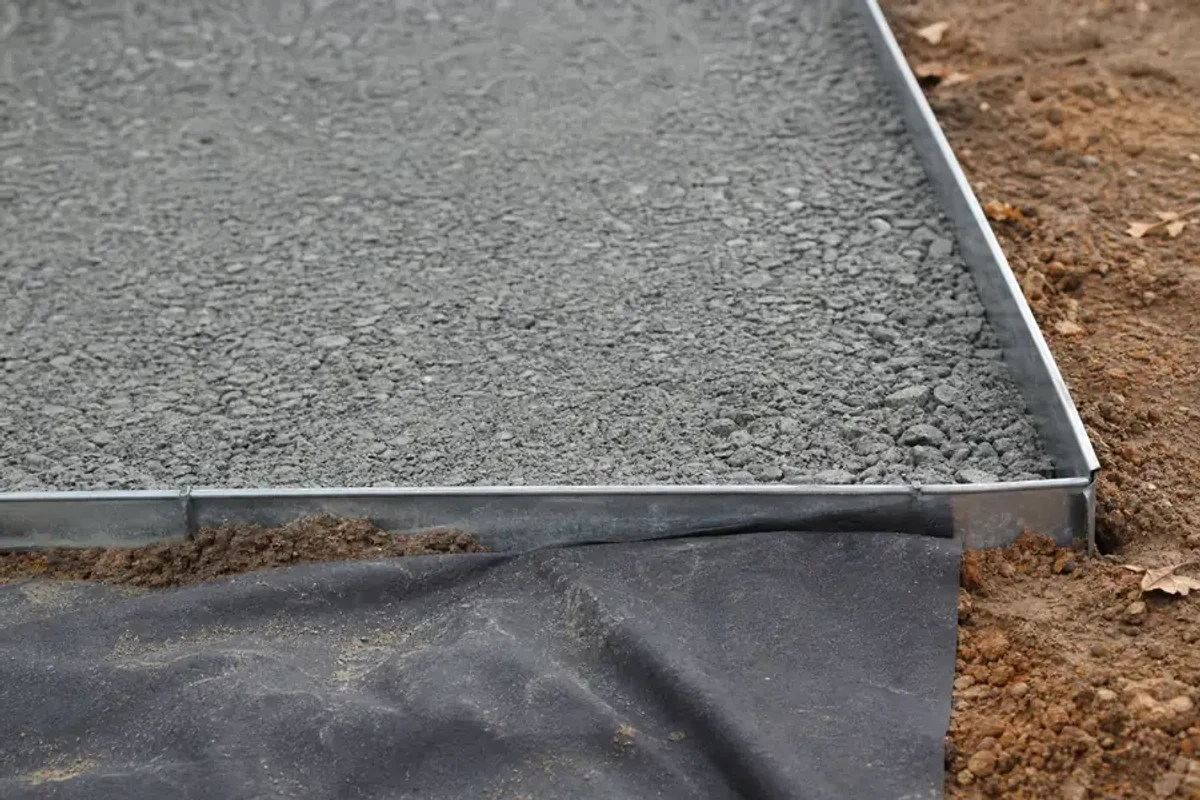
Figure your gravel by multiplying the patio's square footage by the depth in feet, then converting cubic feet to tons for the base and the surface layer separately, since they're different products. A 200 square foot patio at 5 inches of base works out to about 83 cubic feet, 3.1 cubic yards, or roughly 4.3 tons of crusher run, plus around 1.5 tons of surface stone at 2 inches.
| Layer | Material | Depth | Best for |
|---|---|---|---|
| Sub-base | Crusher run | 4-6 in | Patios with furniture, grills, or fire pits |
| Surface | Natural pea gravel | 2 in | Bare feet, seating areas, smooth walking |
| Surface | 3/4 inch crushed stone | 2 in | High traffic areas, angular lock underfoot |
| Bedding (optional) | Mason sand | 1 in | Leveling under a fire pit ring or paver edge |
Order about 10 percent more than the math calls for on both layers. American Rock Supply delivers crusher run and surface stone as separate line items, so budget for both when you place the order. A short second delivery to finish a patio costs more, in time and money, than a slightly heavier first order.
How do you keep the gravel from spreading?
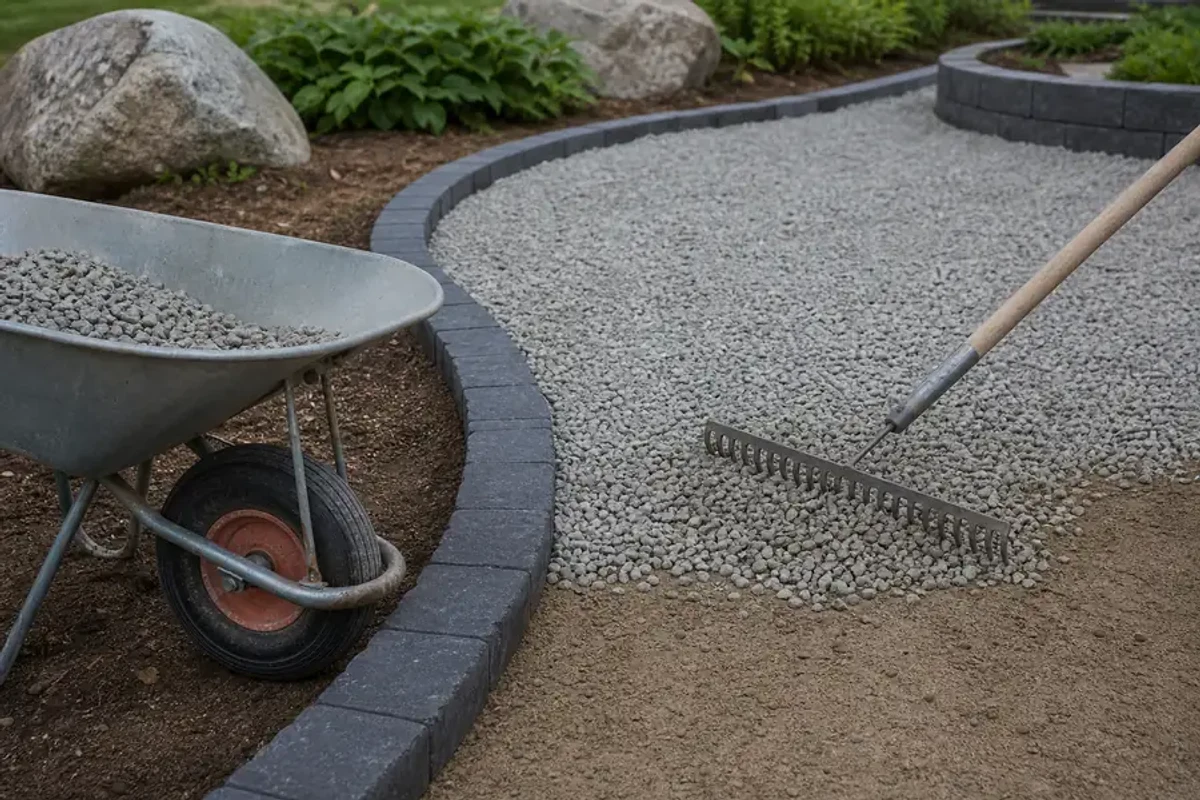
Rigid edging combined with a properly compacted base keeps gravel from spreading. Without both, loose stone migrates onto the lawn within a season and the patio's edges thin out fast.
The edging does the physical work of holding stone inside the footprint, but the base does the structural work: a well compacted crusher run layer locks the surface stone above it instead of letting it sink and scatter under weight. In wet climates like Florida, build in a slight crown or slope away from the house too, since a flat gravel bed holds standing water after heavy rain. The guide on the best gravel for drainage covers grading and drainage for a gravel surface in more detail.
Before you order
- Measure the patio's length and width, then add 10 percent for waste and settling.
- Plan for 6 to 8 inches of total depth: 4 to 6 inches of base plus a 2 inch surface layer.
- Pick a surface stone based on foot traffic and how the patio will be used.
- Run your measurements through the gravel calculator to get exact tons before you order.
FAQs
Can you put a gravel patio directly on dirt or grass?
No. Remove the sod and topsoil first, then excavate to the full depth before adding fabric and base material. Building straight on grass traps organic material under the stone, and it decomposes and settles unevenly within a year or two.
Do you need edging for a gravel patio?
Yes, in almost every case. Without rigid edging, foot traffic and rain push loose stone outward, and the patio slowly loses its shape and depth at the edges over a season or two.
How thick should a gravel patio be?
Most gravel patios run 6 to 8 inches total: 4 to 6 inches of compacted base plus a 2 inch surface layer of decorative stone. Colder climates with real freeze-thaw cycles hold up better nearer the deep end of that range.
How much gravel do you need for a 12 by 12 patio?
A 12 by 12 ft patio covers 144 square feet. At 4 inches of base, that comes to 48 cubic feet, about 1.8 cubic yards, or roughly 2.5 tons of crusher run. A 2 inch surface layer over the same footprint adds another 24 cubic feet, close to 0.9 cubic yards, or about 1.2 tons of decorative stone. Order about 10 percent more than the math calls for on both layers.
What is the best gravel for a patio surface?
Natural pea gravel gives a smooth, rounded surface that is comfortable underfoot, which suits seating areas and anywhere people walk barefoot. 3/4 inch crushed stone has angular edges that lock together and resist spreading under chairs and foot traffic, so it holds up better in high traffic areas. Both go down 2 inches deep over a compacted crusher run base.

Fifteen years in bulk aggregate supply taught Derek Malone to ask the boring questions before the expensive ones: how deep, how much, what's underneath. He works out of Kansas City, scheduling deliveries through winters that freeze the ground solid and summers dry enough to crack it. That swing is why he treats climate as part of the math, not an afterthought. He's seen enough driveways fail within a year to know a good-looking stone and a good stone aren't always the same thing.