Rock Garden Ideas: 40 Designs From Alpine to Desert
A rock garden only looks finished when the stone does three jobs at once: anchor the design, bridge the slope, and cover the soil. Real rock garden ideas layer boulders, mid-size cobble, and gravel mulch together instead of scattering one size of stone across dirt. Get the climate wrong too (wet-soil plants in a desert bed, or heavy clay under alpine grit) and the whole design rots or washes out within a season. The 40 designs below group by climate zone, from alpine scree to desert xeriscape, with the material list and drainage fix each one needs.
Key takeaways:
- Every rock garden needs three stone scales: boulders for structure, cobble for transition, gravel mulch for the surface.
- Climate decides stone color, plant choice, and how deep the drainage layer needs to go.
- Poor, dry soil needs a lean, fast-draining mix, not amended garden soil straight from a bag.
- Alpine and desert beds fail most often from standing water at the plant crown, not from winter cold.
- Mixing boulder placement, mulch color, and plant layout turns a handful of base designs into dozens of variations.
Rock garden ideas for alpine and mountain climates
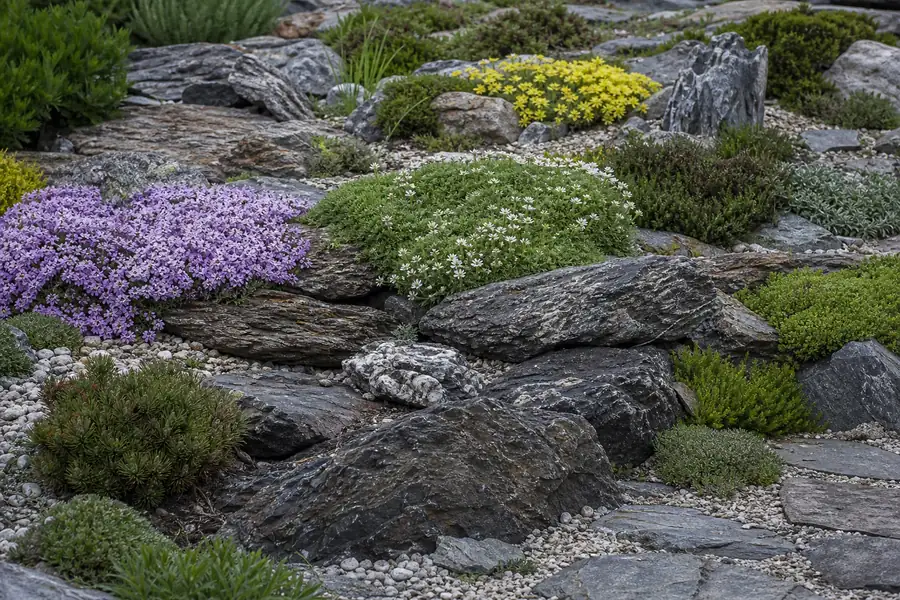
Alpine rock garden ideas copy the scree slopes mountain plants evolve on: fast-draining grit, small stones stacked in loose pockets, and almost no organic mulch at the surface. In Colorado and other high-elevation regions, freeze-thaw cycles heave anything built over compacted clay, so the bed needs 8 to 12 inches of coarse gravel sub-base before any planting soil goes in.
From that base, the same scree layout branches into stone troughs, dry-stacked terraces, and crevice gardens that tuck plants between vertical rock edges. Each variation swaps boulder placement, stone color, or plant species, which is how these three core alpine layouts stretch into roughly ten distinct designs.
What stone sizes does a rock garden need
A rock garden needs three stone scales working together. Boulders, usually large river rock 18 inches and up, anchor the bed and mark focal points. Mid-size cobble, like river rock in the 3 to 10 inch range, bridges the gap between boulders and planting pockets. Gravel mulch, usually natural pea gravel at 3/8 to 3/4 inch, covers the surface and keeps weeds down. Skip one of the three and the bed looks flat or the plants sit in standing water.
| Stone size | Typical range | Role in the bed | Best for |
|---|---|---|---|
| Boulders | 18 in and up | Anchor points, focal rock | Terraced slopes, bed edges |
| Mid-size cobble | 3-10 in | Transition between boulders and plants | Scree beds, dry creek edges |
| Gravel mulch | 3/8-3/4 in | Surface cover, weed suppression | Desert beds, low-water plantings |
Figuring quantities starts with square footage and depth. A 200 sq ft alpine bed at 3 inches of cobble runs about 2.5 tons of stone, with the boulders and mulch layer ordered separately. The river rock calculator runs that math for any bed size and depth.
Rock garden ideas for desert and dry climates
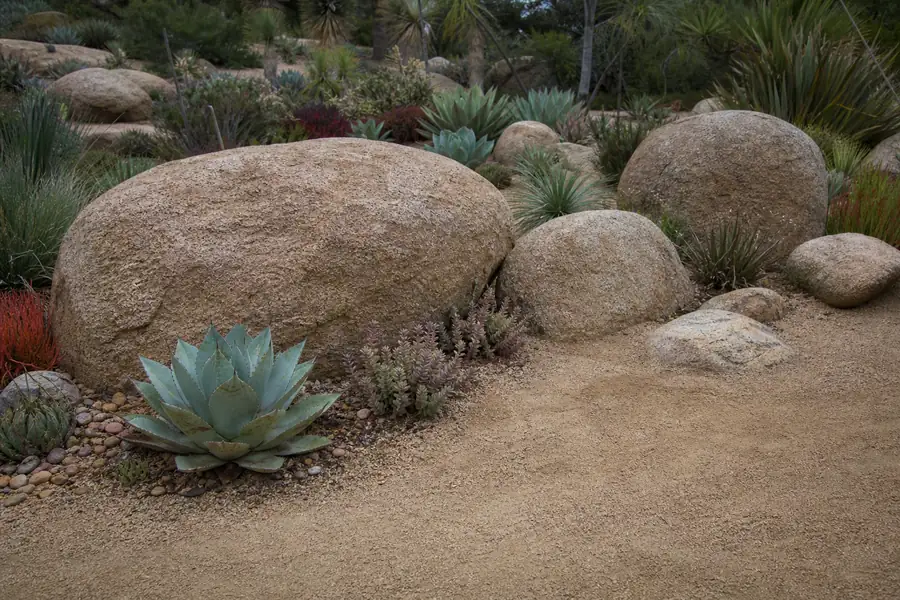
Desert rock garden ideas lean on large boulders, minimal plant mass, and a gravel mulch surface that reflects heat instead of trapping moisture. In Arizona and other low-desert regions, monsoon downpours on flat ground pond around cactus crowns, so the bed needs a slight crown and a gravel layer that sheds water fast.
Within that frame, desert designs split into dry wash features that mimic arroyos, raised boulder clusters planted with agave and yucca, and buff-toned gravel beds that match the native soil color. Swapping stone tone, plant species, and boulder count turns those three layouts into another block of the 40 ideas.
How do you fix drainage and soil for a rock garden on poor, dry ground
Poor, dry ground needs a lean, fast-draining mix, not straight garden soil, or alpine and desert plants rot at the crown within a year. Blend one part garden soil with one part coarse sand or fine gravel, and skip the compost most garden beds call for.
Grade the bed so water moves away from the planting pockets instead of collecting in them. On clay-heavy lots, a 4 to 6 inch gravel sub-base under the soil mix does more for plant survival than any amount of watering restraint.
Rock garden ideas for woodland and coastal climates
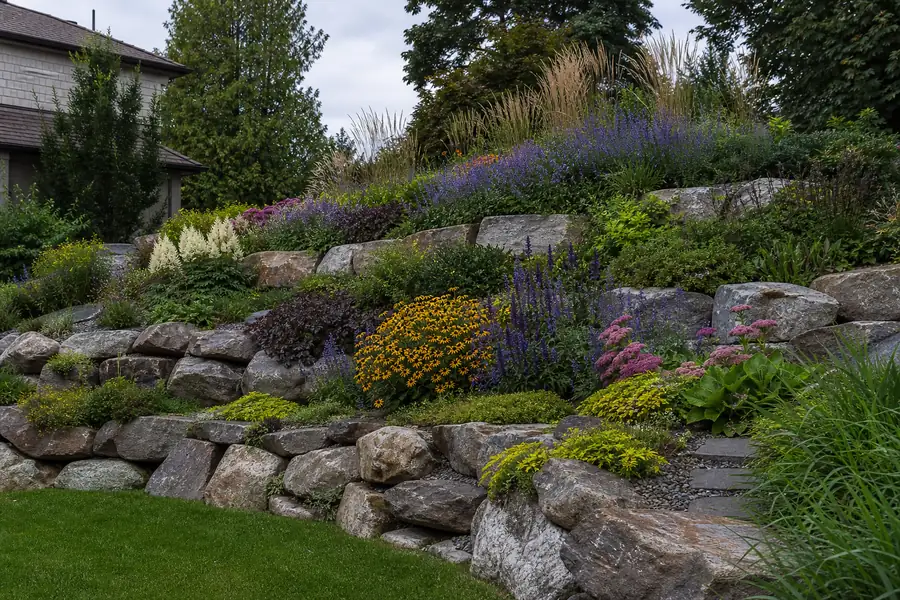
Woodland rock garden ideas work at a smaller stone scale, since ferns, moss, and shade perennials carry the texture instead of bare rock. Cobble in the 3 to 6 inch range, tucked between root systems and damp leaf litter, reads as natural in a way large boulders do not under tree cover.
The same small-stone approach extends into front yard beds along shaded foundations and coastal plantings that handle salt spray and sandy, fast-draining soil well. The front yard landscaping ideas with rocks guide covers layout options for the entry-bed versions of this style.
FAQs
Can you build a rock garden on clay soil?
Yes, but clay needs a gravel sub-base and an amended soil mix first, or water pools around plant roots and they rot. Plan on 4 to 6 inches of coarse gravel under a lean sand and soil blend before planting.
What size rock is best for a rock garden?
Most rock gardens use three sizes together rather than one: boulders 18 inches and up for structure, cobble in the 3 to 10 inch range for transition, and gravel mulch under an inch for the surface. Picking only one size usually looks flat or leaves plants sitting on bare dirt.
Do rock gardens need landscape fabric underneath?
Landscape fabric helps under gravel mulch on flat ground, but it is not needed under boulders or in planting pockets where roots need to reach soil. Skipping fabric under the mulch usually means more weeding later, not plant failure.
How much gravel mulch does a rock garden need?
A 2 inch layer of pea gravel covers roughly 100 square feet per ton, so a 150 sq ft bed needs about 1.5 tons. Exact coverage shifts with stone size and depth, so measure the actual bed before ordering.

Fifteen years in bulk aggregate supply taught Derek Malone to ask the boring questions before the expensive ones: how deep, how much, what's underneath. He works out of Kansas City, scheduling deliveries through winters that freeze the ground solid and summers dry enough to crack it. That swing is why he treats climate as part of the math, not an afterthought. He's seen enough driveways fail within a year to know a good-looking stone and a good stone aren't always the same thing.