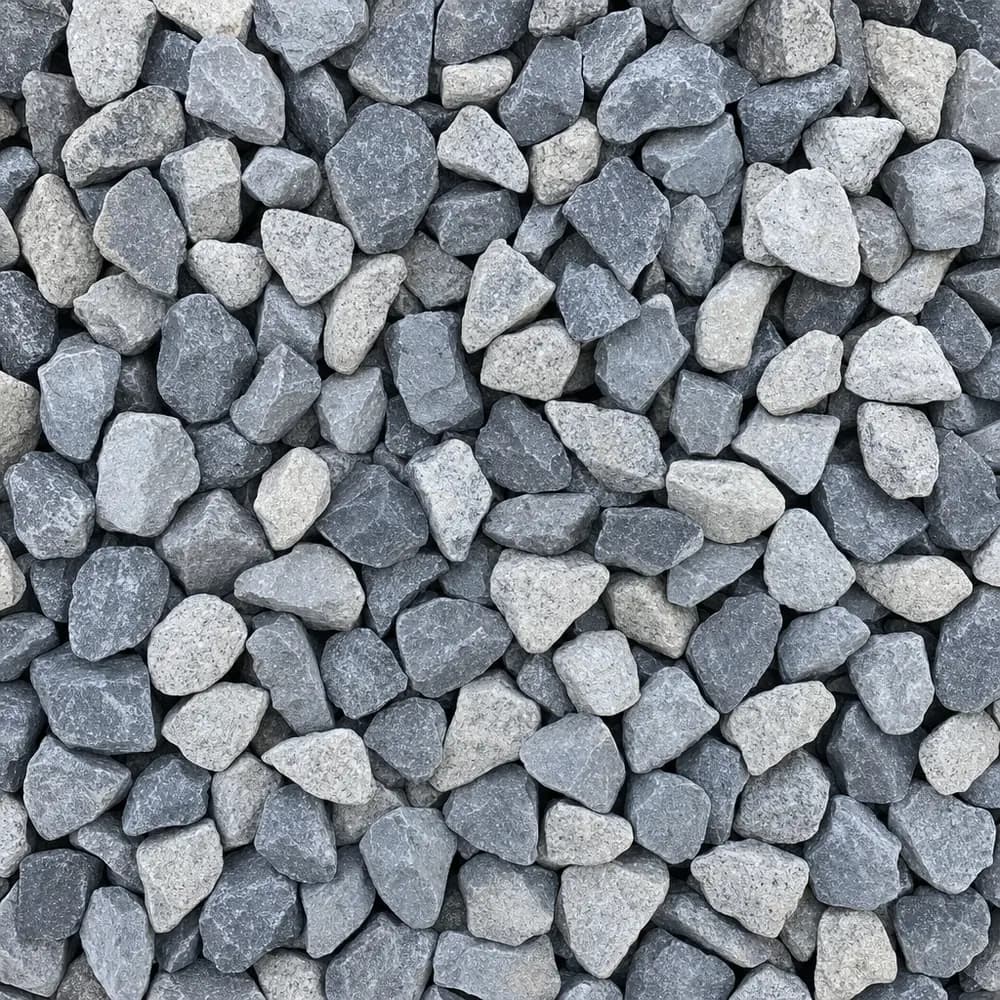
#89 Crushed Stone: The Small Angular Size That Locks
Also known as: #89 Stone, 3/8" Clean Stone, Pea-Size Crushed Stone
Fine #89 crushed stone, roughly 3/8 inch down to fines. A small, versatile aggregate used in paver joints, chip seal surfaces, and concrete mixes where a tight, compactable stone is needed.
From $429 for 1 ton, delivery to 65074 included (larger loads cost significantly less per ton)
Free delivery included
Enter your ZIP to see your competitive price
Delivered to 65074
Pick a delivery date
Weekday delivery, earliest Nov 3
“I used this on a garden path and it looks nice. Small enough to be comfortable underfoot.”
Angela D. · Verified Buyer
Get a Free Quote
Fill out the form and our sales team will get back to you within the hour.
Tip some out of a bucket and it rattles rather than puffs. The pieces are about the size of a pencil eraser, angular and chipped rather than rounded, and riding between them is a finer fraction that coats the larger chips and settles to the bottom of the bucket. Rub a handful between your palms and it feels gritty but not dusty. That mixture, roughly 3/8 inch at the top end tapering down to fines, is the whole character of #89 crushed stone and the reason it does a job no clean stone can.
What it fixes is a specific, irritating set of failures: paver joints that empty out every time it rains, flagstones that rock underfoot, a path surface that will not stay where it was raked.
Why joints empty, and what #89 crushed stone does about it
Joint material fails when it is either too coarse to stay put or too fine to stay in place. A clean single-sized stone rolls out of a narrow joint; pure dust washes out in the first storm. A graded material with chips and fines together wedges: the angular pieces bridge across the joint and the finer material packs around them, so the fill supports the edges of the units instead of just filling a gap.
The same property makes it a reliable setting bed under flagstone. It can be screeded to a level and then holds that level once the slab is bedded into it, which is why a patio set this way stops rocking.
What frost heave and baked caliche each do to a joint
Region shows up in this material at the joint line rather than anywhere else.
In frost country, water in a joint freezes and lifts. A joint that is full and tightly packed has less room for water than an empty one, so keeping joints topped up is genuinely a winter maintenance task and not just a cosmetic one. In the desert southwest the problem reverses: baked ground and sudden monsoon rain mean joints are dry, loose and easy to blow or wash out in the first hard downpour of the season. On the wet coasts, joints stay damp and slowly collect organic matter, and moss in a joint is usually a sign the surface is not drying between rains rather than a sign the fill has failed.
Setting a flagstone patio and filling the joints in one pass
Work in this order and the material does most of the job for you.
Build and compact the structural base first, in a material with fines in it; this size is not a base course. Screed a thin, even setting bed over it, about an inch, and level it with a straightedge run on rails. Set each slab and tap it down so it beds evenly rather than bridging on high points. When the units are down, sweep the same material across the surface diagonally so it falls into the joints, mist it lightly to settle, then sweep again. Two or three rounds of sweep-and-settle fill the joints properly; one round never does.
A culvert outlet and a yard regrade are the wrong jobs for it
Two requests come up often enough to answer here.
A culvert outlet or a ditch lining will wash this size away. Water leaving a pipe carries energy, and material this small has no mass to resist it. That job wants #4 Crushed Stone or, in stronger flow, RipRap.
Filling a low spot or regrading a yard is not a job for crushed stone at all. Low areas come up with Fill Dirt, finished with Top Soil so grass can be grown on the repair. Using an aggregate to level ground you intend to plant leaves a layer that every future rake and spade will find.
A xeriscape or rock garden bed sits between the two. It works, and it looks tidy at this size, but it packs down firm and tracks onto shoes, so most rock garden beds are better in a rounded or larger decorative stone with this size kept for the paths between them.
Topping the joints back up at the end of the first season
Expect the joints to drop. Over the first few months the fill consolidates, rain moves some of it and traffic works the rest down, and a patio that looked finished in May will show low joints by September. Sweep in more of the same material, mist it and repeat. After the first year or two the rate slows considerably. The other routine task is keeping organic matter off the surface, because leaf litter breaking down in a joint is what lets weed seed germinate there.
Cubic yards for 220 square feet of flagstone and its joints
Hypothetical examples. This site's calculator figures 3/8 inch chips at about 2,800 lb per cubic yard, or 1.40 tons per yard, so the tonnages below are approximate; the stone calculator will run the same conversion on your own dimensions.
Setting bed. An 11 by 20 foot patio at 1 inch: 11 x 20 = 220 square feet. 220 x 1 / 12 = 18.33 cubic feet. 18.33 / 27 = 0.68 cubic yards, and 0.68 x 1.40 = just under 1 ton.
Joint fill for the same patio. Take the joints as roughly a tenth of the surface at 1.5 inches deep: 22 square feet x 1.5 / 12 = 2.75 cubic feet, or 0.10 cubic yards, which is only about 0.14 tons. Order it together with the bedding rather than separately, and keep what is left for the autumn top-up.
Putting a small order on the truck
Set the tonnage and the delivery date on this page; delivery is arranged at checkout by ZIP code. Small quantities of a fine material are worth combining with the base or bedding material for the same project so that one load covers the build. Ask for the drop on a hard surface if you have one, since this size picks up soil quickly off a lawn and dirty joint fill stains a new patio. If you are unsure how much joint material a given slab pattern will take, describe it on the contact page and ask for a quote by email.
Quickly Calculate How Much You Need
Material: #89 Crushed Stone
How to Measure
Measure the length and width of your project area in feet
Decide on depth in inches (2" for landscaping, 4" for driveways)
Enter the values above and we'll calculate the tonnage you need
Need help figuring out the right amount? We can help!
Call or text us at (888) 389-5517 and we'll help you calculate the right quantity for your project.
Not sure how much you need? The Stone Calculator has depth guides, coverage charts and worked examples for this material.
Frequently Asked Questions About #89 Crushed Stone
Customer Reviews
Strong base material
It's a good size for a path and it packs down well.
Tom E. · Las Vegas, NV · Verified Buyer
This is the third time I've ordered from them for different jobs around the property. Same consistent stone, same easy process every time.
Dana H. · Austin, TX · Verified Buyer
Used a load of this stone as the base for a chicken coop run.
Karen J. · Scottsdale, AZ · Verified Buyer
Fine texture
This packs down nicely and doesn't have that loose gravel feel. It worked well for areas where you want something more stable.
Tom K. · Oklahoma City, OK · Verified Buyer
Small and neat
These are small enough to walk on comfortably. Used them for a path through the garden and they look tidy.
Kelly M. · Cincinnati, OH · Verified Buyer
Strong base material
The small, gray crushed stone arrived as described and worked well for my project.
Kelly S. · Greensboro, NC · Verified Buyer
Truck rolled in right on schedule.
Jason H. · Huntsville, AL · Verified Buyer
Fine for a walkway
I used this around some stepping stones and it filled in nicely. Looks neat and tidy.
Karen J. · Scottsdale, AZ · Verified Buyer
A little dusty
It settled fine and looks good on the path.
Jeff P. · Springfield, MO · Verified Buyer
Strong base material
This worked well for a garden path. It packs down nicely and looks neat.
Rob T. · Orlando, FL · Verified Buyer
Good for paths
I used this on a garden path and it looks nice. Small enough to be comfortable underfoot.
Angela D. · Mesa, AZ · Verified Buyer
Good size
The stones are a good size for a path. They're small enough to walk on comfortably.
Dave S. · Chattanooga, TN · Verified Buyer
#89 Crushed Stone has 15 verified customer reviews with an average rating of 4.8 out of 5.