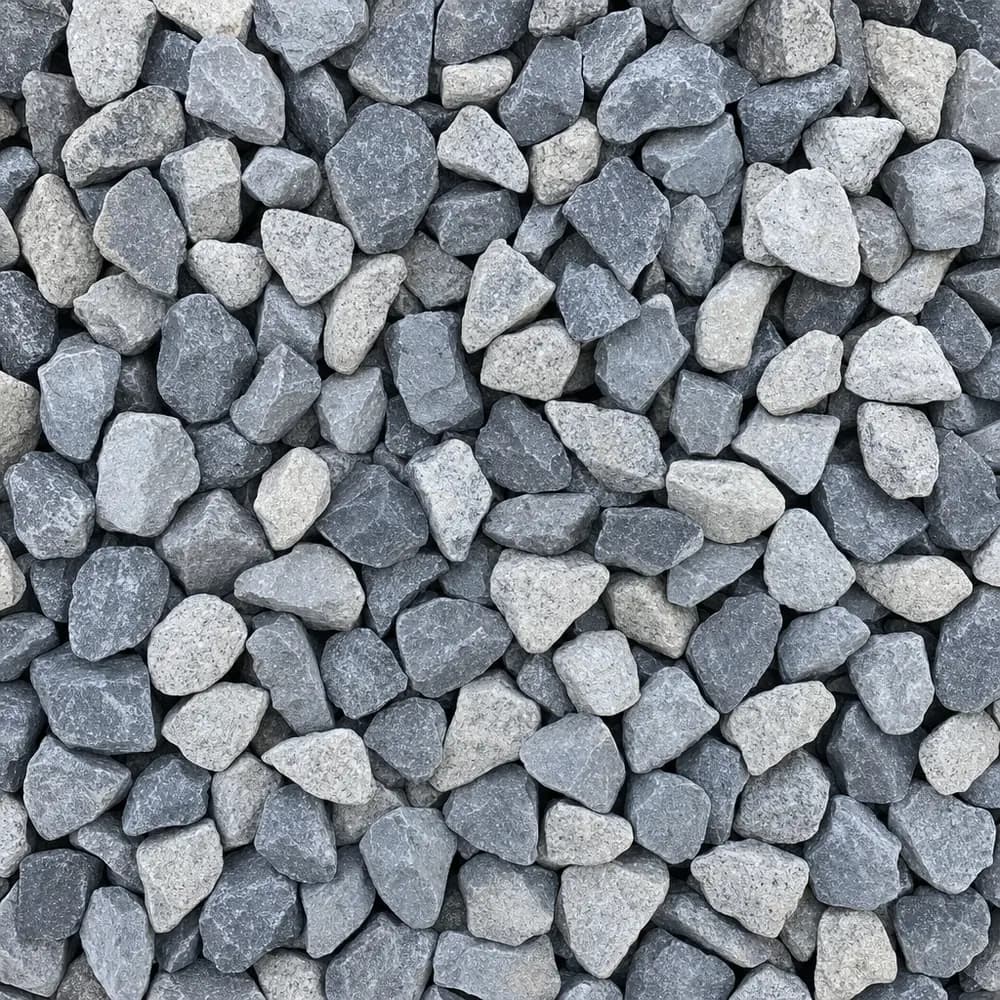
Drainage Rock: Graded for Water, Not for Load
Also known as: Drainage Rock, Drainage Gravel, French Drain Rock, Septic Rock
Clean 3/4 to 1-1/2 inch drainage rock, available in rounded and angular varieties, washed and graded specifically for drainage. Allows maximum water flow through French drains, septic fields, and retaining wall backfill.
From $388 for 1 ton, delivery to 22845 included (larger loads cost significantly less per ton)
Free delivery included
Enter your ZIP to see your competitive price
Delivered to 22845
Pick a delivery date
Weekday delivery, earliest Nov 3
“Needed clean rock for backfilling behind a new retaining wall, and this was exactly what I needed, no fines mixed in to clog things up.”
Stephanie I. · Verified Buyer
Get a Free Quote
Fill out the form and our sales team will get back to you within the hour.
A wet foundation is a summer argument in the rainy south and a spring one in the frost belt, but the material that answers it is the same in both places, and it is not simply whichever stone the yard has most of. Drainage rock, also sold as drain rock or drainage gravel, is washed and graded for one job: keeping open space between pieces so water can move. Everything below follows from that, including the places it should not be used.
The size band runs from roughly 3/4 inch to 1-1/2 inches, wider than a single graded number, and it comes rounded or angular depending on the source. Both are washed clean of the fines that would otherwise fill the voids.
For a side-by-side of the drainage stones, with the standard sizes, the void space and the washed versus screened question, read our guide to drainage rock.
Is drain rock the same thing as #57 stone with a different label?
Close, but not identical, and the difference is worth two minutes before ordering.
A numbered stone is defined by a gradation standard, so #57 Stone is 3/16 to 1 inch and nothing else. This product is defined by its function, which is why the band is wider and why the pieces may be rounded rather than crushed. If a plan sheet, an inspector or a septic design names a number, order that number. If the requirement is written as clean drainage rock or drain gravel, this is the line to buy from.
What it is definitely not is Crusher Run or Road Base. Both of those keep their fines so they can compact, and fines in a drainage trench are the failure you are trying to avoid. It is also not the same purchase as River Rock, which is sold to be looked at and sized for appearance rather than flow.
Rounded or angular: which one does the trench want?
Rounded pieces nest into a stable arrangement and give slightly freer flow where there is little weight on top. Angular pieces bear against each other and hold their open structure better under the load of backfill and soil.
The practical rule reads like this. Under soil, backfill or anything that will be driven near, ask for angular. In an exposed landscape drainage feature where the rock is part of the finish, rounded suits the look and drains perfectly well. Where a design is silent, angular is the safer default because it does not lose void space as the load above it settles.
Can anyone walk or drive on it once it is in?
Walk on it, yes, carefully. Drive on it, no.
This is loose, single-band, washed rock with nothing binding it. On foot the pieces shift under each step, which is unpleasant but harmless. Under a wheel it does exactly what open stone does: ruts, spreads, and pushes out sideways. The same thing happens to it at a construction entrance, where trucks cross the same strip repeatedly. A 12 by 30 foot entrance at 6 inches works out at 360 square feet, 360 x 6 / 12 = 180 cubic feet, 180 / 27 = 6.67 cubic yards, and every yard of it would be in the ditch by the end of the month. That job wants larger, tougher pieces, which means #4 Crushed Stone or Railroad Ballast.
What pipe size does it belong around, and how much cover goes over the top?
Perforated pipe in residential work is usually 3 or 4 inches, and this size band suits both. The pieces are large enough not to enter the perforations and small enough to pack around a curve without bridging and leaving a hollow.
A working arrangement in a trench looks like this: filter fabric lining the trench and left long on both sides, 2 to 3 inches of rock bedding the pipe, the pipe laid with a consistent fall, then rock brought at least 6 inches over the crown before the fabric folds closed across the top. Soil goes back above the fabric, never directly onto the rock.
Depth in a trench is whatever the design says. The number that is not negotiable is the cover over the pipe, because that is the reservoir the system drains through.
Is it loose depth or compacted depth in an exposed bed?
Loose. Nothing here compacts in any meaningful sense, and trying to plate compact it only breaks corners off and creates the fines you paid to have washed out.
In an open bed the layer is measured as it lies. Two inches is too thin to cover fabric reliably at this size, because individual pieces at the top of the band are close to 1-1/2 inches on their own. Three to four inches is the working range for a visible drainage bed, and it will settle by a fraction of an inch as the pieces find their positions in the first weeks.
What has to go underneath on soft or saturated ground?
Fabric always. On ground that stays wet, fabric alone is not enough.
Rock laid on saturated soil presses in under its own weight until the surface dips and soil rises between the pieces, and the bed slowly disappears. Where that is likely, put a compacted layer down first and lay the fabric over it, so the rock rests on something that will not move. On heavy clay the same layer stops the clay pumping up through the fabric every time the ground is loaded.
What does a 45 foot pond shelf work out to in tons?
A band of washed rock along the waterline takes the wave wash and keeps the bank from undercutting, and it is easy to size.
Take a hypothetical shelf 45 feet long and 4 feet wide at 8 inches deep. 45 x 4 = 180 square feet. 180 x 8 / 12 = 120 cubic feet. 120 / 27 = 4.44 cubic yards. Angular crushed material is figured at about 2,800 lb per cubic yard on this site, so 4.44 x 1.40 is about 6.2 tons. A rounded load runs nearer 2,700 lb per cubic yard, which is the figure this site's river rock calculator uses, and would come out around 6 tons for the same shelf.
For a patio, the answer is different again. Under conventional pavers the base has to compact, so that layer is road base or crusher run with a thin bedding course on top. Only a permeable paver design calls for open-graded layers, and there the bedding is a small chip such as #8 Crushed Stone. Put this material straight under pavers on a standard build and the patio will move.
What should be ready before the truck backs in?
Trenches open, fabric on site, and a dump spot chosen on firm ground with a clear approach. Delivery is arranged at checkout by ZIP code, and the closer the pile can land to the work the fewer wheelbarrow runs the weekend takes. A pile of washed rock can sit on grass for a few days without killing it, but a tarp underneath makes the last shovelfuls much easier to lift clean.
Set the quantity and the date here on the product page. If a septic or foundation design names a gradation and you want a second read before committing, send the dimensions and the spec line through the contact page and ask for a quote by email.
Quickly Calculate How Much You Need
Material: Drain Rock
How to Measure
Measure the length and width of your project area in feet
Decide on depth in inches (2" for landscaping, 4" for driveways)
Enter the values above and we'll calculate the tonnage you need
Need help figuring out the right amount? We can help!
Call or text us at (888) 389-5517 and we'll help you calculate the right quantity for your project.
Not sure how much you need? The River Rock Calculator has depth guides, coverage charts and worked examples for this material.
Frequently Asked Questions About Drain Rock
Customer Reviews
Reliable drainage material
It's drain rock. It drains as expected.
Susan B. · Fort Worth, TX · Verified Buyer
Good size
The stones are a good size for drainage. They let water through without packing down.
Stephanie I. · Phoenix, AZ · Verified Buyer
Price per ton beat the two other yards I called around to first.
Jennifer F. · Scottsdale, AZ · Verified Buyer
They kept me in the loop with texts leading up to delivery day, which I liked.
Nicole D. · Tampa, FL · Verified Buyer
Needed clean rock for backfilling behind a new retaining wall, and this was exactly what I needed, no fines mixed in to clog things up.
Stephanie I. · Phoenix, AZ · Verified Buyer
Reliable drainage material
This worked well for a drainage trench. It drains nicely and hasn't clogged.
Kelly A. · Dallas, TX · Verified Buyer
Happy With My Order
I had a low spot that turned into a pond every time it rained. I filled it with this and the water finally has somewhere to go.
Tony P. · Colorado Springs, CO · Verified Buyer
Water moves through it
I put this in a trench to redirect runoff. Water flows through it instead of pooling up.
Gina J. · Greensboro, NC · Verified Buyer
Fair price for the quality
It drains well and the price was reasonable.
Greg F. · Phoenix, AZ · Verified Buyer
Good for wet spots
I used it to fill a soggy area near the downspout. No more standing water after a rain.
Jennifer F. · Scottsdale, AZ · Verified Buyer
Drain Rock has 10 verified customer reviews with an average rating of 4.9 out of 5.