3/4" Crushed Stone: The Size Named in Inches, Not Numbers
Also known as: 3/4" Crushed Rock, 3/4" Clean Stone, Three Quarter Stone
Versatile 3/4-inch angular crushed stone ideal for driveways, drainage, and construction bases. One of the most popular aggregate sizes for residential and commercial projects.
From $401 for 1 ton, delivery to 43152 included (larger loads cost significantly less per ton)
Free delivery included
Enter your ZIP to see your competitive price
Delivered to 43152
Pick a delivery date
Weekday delivery, earliest Nov 3
“I used this for a driveway and it's holding up well. The size is right for that kind of use.”
Greg E. · Verified Buyer
Get a Free Quote
Fill out the form and our sales team will get back to you within the hour.
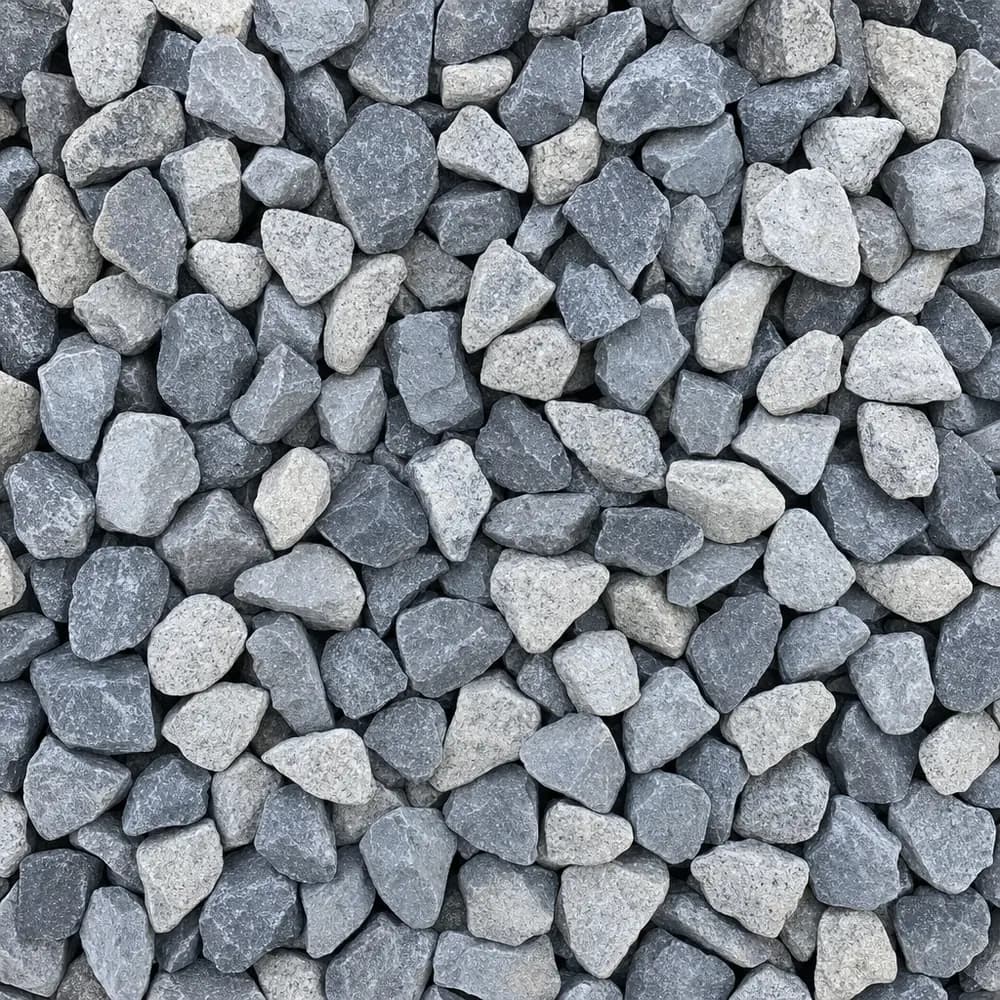
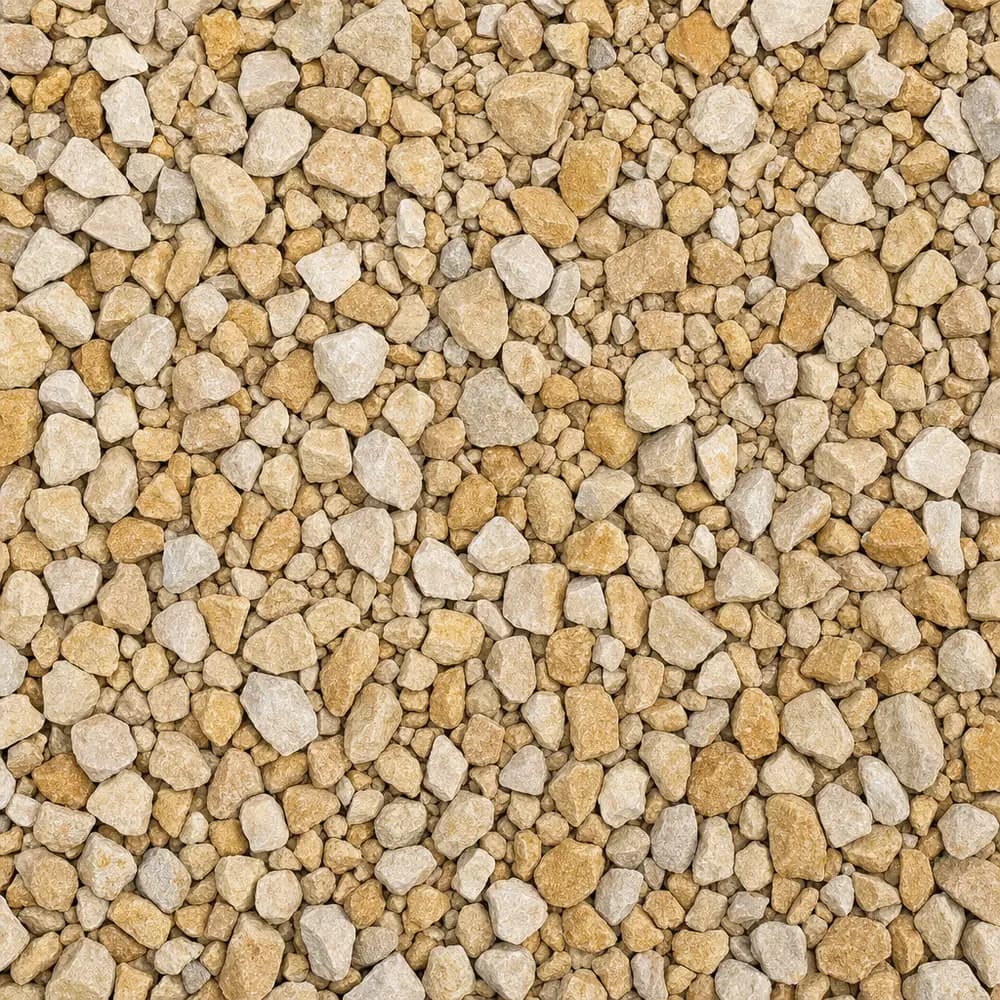
The pile that lands at a house in Maine and the pile that lands at a house in Arizona under the same order line can look nothing alike in color and still be the same product, because the name describes a size and a crush, not a rock. That is the first thing to settle about 3/4" crushed stone. Judge it on the shape of the pieces and the absence of dust, not against a photograph taken in someone else's county.
The second thing to settle is which material the reader actually wants, because three of them sit close enough together on a supplier list to get ordered by mistake.
3/4" crushed stone, #57 stone and crusher run on the same order form
Two naming systems are in use at once. One describes the stone by its dimension in inches. The other uses graded numbers from an industry sizing standard. They overlap, which is why a plan sheet and a delivery ticket can disagree while describing much the same rock.
| What you might be handed | Roughly | What changes if you swap to it |
|---|---|---|
| 3/4" crushed stone | 3/4 inch, angular, single size | Named by dimension, no fines in it, drains through |
| #57 Stone | 3/16 to 1 inch, washed | The graded number an engineer or inspector is likely to ask for |
| Crusher Run | Mixed sizes with the fines left in | Tightens into a firm surface, and stops draining |
| Road Base | Graded blend with fines | Built to compact under something else |
| Drain Rock | 3/4 to 1-1/2 inch, washed | Sold for the drainage role, wider size band |
The line that matters runs between the clean sizes and anything carrying fines. Fines are the dust and sand-sized particles that fill the gaps between pieces. Leave them in and the material locks up under a roller. Take them out and water runs straight through. You cannot have both from one load, whatever a benefits list says, and this size sits on the clean side of that line.
A low corner that stays soft long after the rain stops
The most common reason to reach for this size is ground that will not dry out. A dip at the bottom of a slope, the turn where a truck always parks, the corner of a working yard that holds a puddle for three days after a storm. Soil there has nowhere to shed water and stays soft, so every pass over it cuts deeper. Angular clean stone gives the water a path and the load something rigid to sit on: the pieces bear against each other rather than rolling, and the gaps stay open because nothing is small enough to plug them.
What it does not fix is a lawn. If the low spot has to be mowed and grown on, the job belongs to Fill Dirt for the grade with a soil layer over it. Stone is for ground that gets walked, parked or driven on, or ground that has to move water away from something.
Clay that holds, sand that lets go, ground that freezes
Region changes the install more than it changes the stone. On heavy clay, water perches rather than passing through, so stone laid straight onto the surface gets pressed in and clay rises between the pieces: lay separation fabric first. On sandy and coastal ground the problem is migration instead, with stone working down into loose sand until the layer thins, so start deeper and edge anything that meets soft ground. Where codes put frost depth as far down as 48 inches, as they do in Massachusetts, New Hampshire and Wisconsin, a saturated layer lifts whatever sits on it every winter. Clean stone holds far less water than a fines-bearing blend, and that is the practical argument for it in the north.
Lining a culvert outlet before the next storm cuts a channel
Water leaving a pipe is concentrated and fast, and bare soil at the outlet turns into a gully in one season. A stone apron spreads that flow and takes the scour instead of the ground.
Cut back to firm ground and lay fabric across the whole footprint, running it up the sides of the channel. Keep the top of the apron level with or just below the surrounding grade so water does not run around the edge, and carry it far enough past the pipe that the flow has slowed before it reaches soil again.
An apron 20 feet long and 4 feet wide at 6 inches: 20 x 4 = 80 square feet, 80 x 6 / 12 = 40 cubic feet, 40 / 27 = 1.48 cubic yards. Crushed stone is figured at about 2,800 lb per cubic yard on this site, so 1.48 x 1.40 is roughly 2.1 tons. That is a hypothetical ditch line, not a specific site.
Where the flow is strong enough to move 3/4 inch pieces, the size is too small and the job belongs to RipRap or #4 Crushed Stone.
A rock garden bed that still reads as stone in year three
In a xeriscape or rock garden bed the same material is doing decorative work, and it fails differently. Nothing washes out. Soil, leaf litter and seed work down into the gaps until the bed reads brown instead of gray and weeds root in the top half inch. Lay fabric under the whole bed and cut crosses in it for plants rather than fitting it around them, edge every boundary that touches lawn or path, and clear the surface once a season before organic matter gets down between the pieces rather than after.
At 2 inches, a bed 12 by 16 feet works out at 192 square feet, 192 x 2 / 12 = 32 cubic feet, 32 / 27 = 1.19 cubic yards, about 1.7 tons. Keep angular stone back from anywhere bare feet go, and use 3/8" Natural Pea Gravel there instead.
Cubic yards for a 30 by 18 foot working area
Take the wet corner from earlier at 4 inches of stone over fabric. 30 x 18 = 540 square feet. 540 x 4 / 12 = 180 cubic feet. 180 / 27 = 6.67 cubic yards. At about 1.40 tons per cubic yard that is 9.3 tons, which rounds sensibly to 9.5.
Add for anything a tape will not show, such as ruts already cut into the surface or a slope that makes one end deeper. And check whether the area is really one rectangle, because the stone calculator takes up to five separate shapes, including circles, and any depth from a quarter of an inch to 24 inches.
Settling the tonnage before a date goes on the load
Work in cubic yards until the shape is final, convert to tons last, and round up. The join between two deliveries never grades as cleanly as one continuous spread, so running short is worse than carrying half a ton over.
Set the quantity and the delivery date on this product page. Delivery is arranged at checkout by ZIP code, and the truck needs a clear approach and a dump spot on firm ground. If the pile has to sit away from the work, remember that one cubic yard is close to a ton and a half of wheelbarrow trips. Plans naming a graded number rather than a dimension are worth a second read, and dimensions can go through the contact page for a quote by email.
Quickly Calculate How Much You Need
Material: 3/4" Crushed Stone
How to Measure
Measure the length and width of your project area in feet
Decide on depth in inches (2" for landscaping, 4" for driveways)
Enter the values above and we'll calculate the tonnage you need
Need help figuring out the right amount? We can help!
Call or text us at (888) 389-5517 and we'll help you calculate the right quantity for your project.
Not sure how much you need? The Stone Calculator has depth guides, coverage charts and worked examples for this material.
Frequently Asked Questions About 3/4" Crushed Stone
Customer Reviews
Used this for pipe bedding on a plumbing repair and the stone graded out consistently, hardly any dust in the pile. Delivery was quick and the whole job went smoother because of it.
Brian E. · Louisville, KY · Verified Buyer
Reliable for a driveway
I used this for a driveway and it's holding up well. The size is right for that kind of use.
Greg E. · Las Vegas, NV · Verified Buyer
Called in a quantity for a French drain, paid online, and had a load in my yard two days later.
Heather N. · Jacksonville, FL · Verified Buyer
Called on a Monday, had stone in my driveway by Wednesday for a garden path project. Size was consistent, no oversized chunks mixed in that you sometimes get from bulk yards.
Hank N. · Birmingham, AL · Verified Buyer
Fine for a path
I used this on a garden path and it looks nice.
Pat D. · Montgomery, AL · Verified Buyer
Reliable for a driveway
It did what I needed it to do for a driveway refresh. I'd order it again.
Brian P. · Greensboro, NC · Verified Buyer
A bit dusty
It compacted well and the driveway looks good now.
Brian E. · Louisville, KY · Verified Buyer
Holds up well
I put this on a driveway and it's held up to regular traffic without migrating. It's a good size for that use.
Tara R. · Fort Wayne, IN · Verified Buyer
Reliable for a driveway
It's crushed stone. It's a good size for a driveway or path.
Heather N. · Jacksonville, FL · Verified Buyer
Good for driveways
This size is a good middle ground for a driveway.
Diane I. · Tampa, FL · Verified Buyer
3/4" Crushed Stone has 10 verified customer reviews with an average rating of 4.9 out of 5.