Fire Pit Seating Ideas: Dimensions, Clearances and Surface Materials That Work
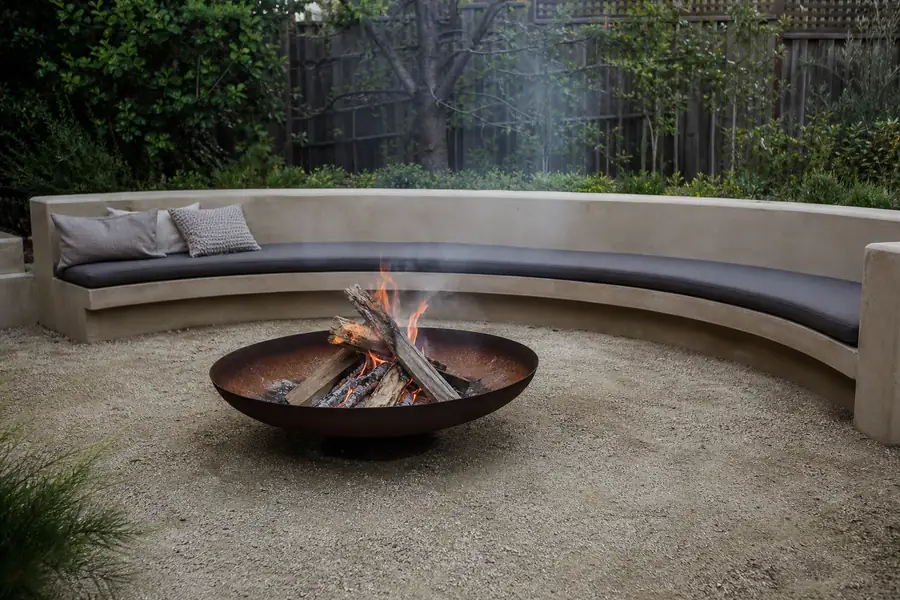
Quick answer: Keep seating 12 to 18 inches back from the fire pit's outer edge for safe radiant heat, size the seating circle at 12 to 16 feet across for 6 to 8 chairs, and leave a 36 to 42 inch walkway ring around the outside of that circle. Angular stone like stone screenings or #89 crushed stone holds patio furniture steady on the pad; rounded natural pea gravel lets chair legs sink.
A fire pit seating area is really two circles: the inner ring where chairs sit close enough to feel the heat, and the outer ring where people walk without clipping a chair leg. Get either measurement wrong and the patio either feels cramped or the fire barely warms anyone sitting down. The numbers below work whether you're setting a portable steel bowl on the lawn or building a fire pit with a mortared stone ring.
Here's the math for a common backyard setup. A 36 inch steel bowl with a 16 inch clearance to the front legs of each chair, and chairs that run about 24 inches deep, needs a seating ring roughly 15 feet across, chair back to chair back, to seat 6 to 8 people comfortably. Add a 40 inch walkway loop around the outside for anyone carrying drinks or firewood, and the finished pad runs close to 22 feet in diameter, or about 380 square feet of surface material total.
Those numbers shrink fast for a four person layout and grow fast past eight, since every added chair adds roughly 30 inches to the circle to keep seats from overlapping.
How far should seating sit from the fire pit's edge?
Seating should sit 12 to 18 inches back from the outer edge of the fire pit opening, measured to the front legs of the chair. That gap keeps radiant heat comfortable on a cool night without putting anyone close enough to catch a spark off a popping log.
Wood burning pits throw sparks farther than gas inserts, so push the clearance to the full 18 inches if you burn wood regularly. A patio builder in Georgia sizing a wood burning pit for heavy summer evening use usually holds that 18 inch line, since warm, humid air carries embers a little farther before they cool and drop. Built-in gas fire pits with a glass wind guard can run closer to 12 inches, since the flame stays contained. Either way, treat that strip as a buffer, not usable floor space, when you lay out the total circle.
How big should the fire pit seating area be?
A fire pit seating area needs roughly 10 to 18 feet of circle diameter depending on chair count, plus a walkway ring around the outside. These are chair back to chair back measurements, not pit diameter:
- 4 chairs: 10 to 11 ft seating circle
- 6 chairs: 12 to 13 ft seating circle
- 8 chairs: 14 to 16 ft seating circle
- 10 chairs: 17 to 18 ft seating circle
Add a walkway ring of 36 to 42 inches around the outside of that circle so people can pass behind chairs without bumping them. Skip the walkway and a 16 foot seating circle backs straight into a fence or garden bed, turning every exit into a squeeze past someone's shoulder. A homeowner in Arizona building a patio tight against a block wall usually holds the full 42 inches, since a wall doesn't give the way a hedge or open lawn does.
Fire pit seating ideas: which surface holds furniture best?
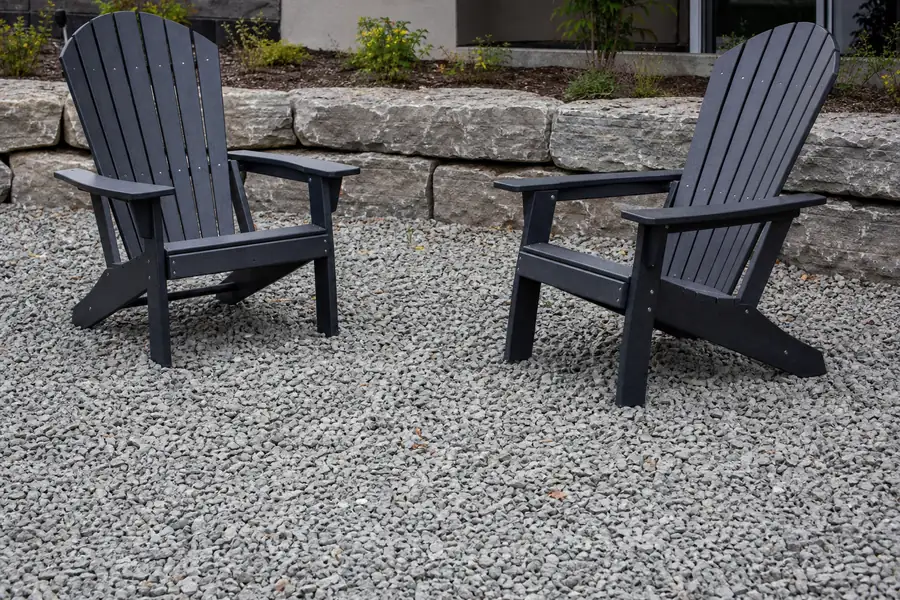
Angular stone holds patio furniture steady under a fire pit seating area; rounded stone lets chair legs sink. The fines in stone screenings and the sharp edges on #89 crushed stone lock together under the weight of a loaded chair, while natural pea gravel's round pebbles roll and let legs punch down a season or two into use.
| Material | Shape | What happens under furniture | Best for |
|---|---|---|---|
| Natural pea gravel | Rounded, smooth | Legs sink 1-2 inches over months as pebbles roll aside | Decorative borders away from seating |
| Stone screenings | Angular fines, compacts tight | Sheds a firm, low-dust surface that resists sinking | The seating pad itself |
| #89 crushed stone | Small angular chips | Locks tight but drains faster than screenings | Pads that need drainage under furniture |
Whichever surface you choose, compact it in 2 inch lifts over a 4 inch base of screenings or #89 stone, then cap with a final inch graded flat. A 380 square foot pad at 3 inches total depth runs close to 5 tons of material; run your own footprint through the stone calculator to dial in the exact tonnage before you order.
Before you order
- Measure the fire pit opening and count the chairs to size the seating circle.
- Plan a 12 to 18 inch heat clearance plus a 36 to 42 inch walkway ring around the outside.
- Pick an angular material such as stone screenings or #89 crushed stone for the pad itself, and save rounded pea gravel for borders away from furniture.
- Confirm tonnage with the stone calculator before the delivery truck shows up.
FAQs
Can I put a fire pit seating area directly on pea gravel?
You can, but expect chair legs to sink an inch or two within a season as the rounded pebbles roll aside under the weight. Pea gravel works better as a decorative border or path next to the seating area than as the surface furniture actually sits on.
How deep should the base go under fire pit seating?
Plan on a 4 inch compacted base of angular stone under the finished surface, topped with a final inch of the same material graded flat. That depth keeps the pad firm enough to hold loaded chairs without rutting after rain.
Is a 10 foot circle big enough for a small fire pit seating area?
A 10 to 11 foot seating circle fits four chairs comfortably around a small 24 to 30 inch fire pit, as long as you still leave the 12 to 18 inch heat clearance and a walkway gap behind the chairs. Go smaller than that and chairs end up touching back to back with no room to get up.

Fifteen years in bulk aggregate supply taught Derek Malone to ask the boring questions before the expensive ones: how deep, how much, what's underneath. He works out of Kansas City, scheduling deliveries through winters that freeze the ground solid and summers dry enough to crack it. That swing is why he treats climate as part of the math, not an afterthought. He's seen enough driveways fail within a year to know a good-looking stone and a good stone aren't always the same thing.